
Dental veneers in Escuinapa: composite and lithium disilicate
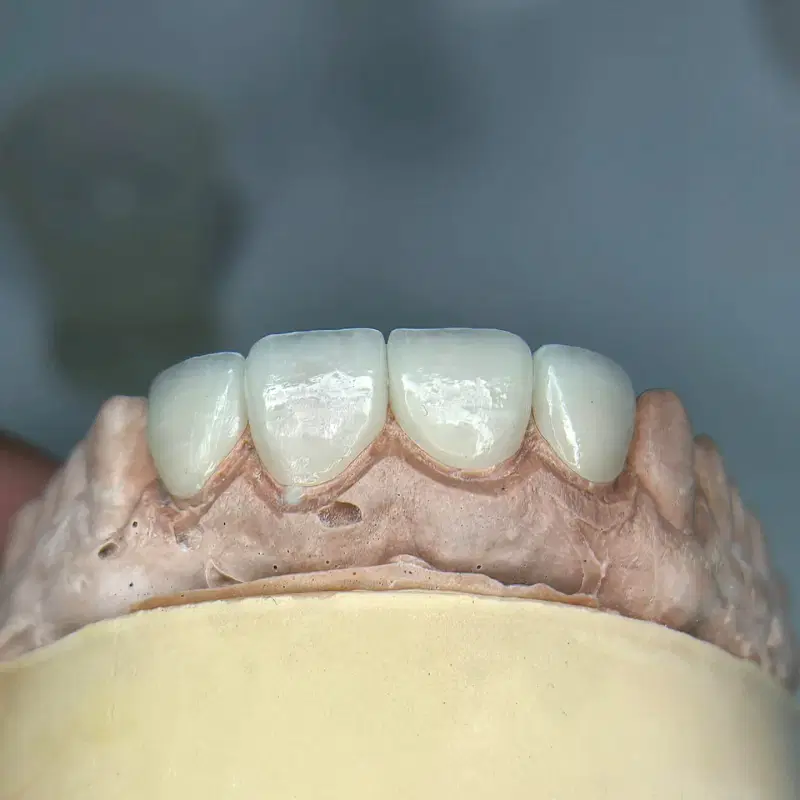
What veneers are
Veneers are thin shells bonded to the front of your teeth to change their color, shape or size. We offer two kinds: injected composite veneers and lithium disilicate veneers, a ceramic often called porcelain or e.max.
Which one fits you depends on your teeth, what you'd like to change and your budget. We'll go over it together at your consultation.
Injected composite veneers
Made from tooth-colored composite resin. Your new smile is first planned on a model; then a clear, custom guide is used to inject the resin directly onto your teeth, so each veneer comes out in the planned shape.
- Little or no tooth reduction in most cases.
- Usually finished in a few visits, which suits a short stay.
- Can be polished and repaired at the office.
- Over the years they can lose shine or stain more than ceramic, so have them checked at your cleanings.
Lithium disilicate veneers
Ceramic veneers made by a dental lab. Lithium disilicate is translucent like enamel, so it looks natural, and it resists stains well.
- They need a small amount of tooth reduction so the veneer sits flush.
- At least two visits: one to prepare the teeth and take impressions, and one to bond the veneers when they come back from the lab.
- With good care they keep their color and shine for many years.
Planning veneers around your stay
If you live here part of the year or come down from Mazatlán, book the consultation first. We'll tell you how many visits your veneers need and how far apart they are, so you can plan around your trip. Ceramic veneers need lab time between the preparation and bonding visits; composite veneers usually don't.
When veneers are not the right choice
What they cost
It depends on how many veneers you need and the material, so we don't quote a price without seeing you. At your consultation you get the price for your case before anything starts.
Payment plans and financing are available.
Frequently asked questions
Are composite or ceramic veneers better?
Neither is better for everyone. Injected composite usually removes less tooth and costs less; lithium disilicate lasts longer and keeps its color better. We'll tell you which fits your case.
How long do veneers last?
It depends on the material and on your care. In general, composite veneers last several years and need polishing now and then; ceramic veneers usually last longer.
Do you have to shave my teeth?
With injected composite, usually very little or not at all. With lithium disilicate, a small reduction so the veneer sits flush. We always aim to remove as little as possible.
How many visits do veneers take?
Composite veneers usually take a few visits close together. Ceramic veneers take at least two, with lab time in between. You'll get the timeline at your consultation.
Does getting veneers hurt?
If a tooth needs preparing, local anesthetic is used. Some sensitivity for a few days afterwards is common.
Are veneers right for you?
At your consultation the doctor checks your teeth and explains your options. Payment plans and financing are available.